Wednesday, February 13, 2013

How Do I "EXPLODE" a Group?

I was asked this question twice this week already so I thought it would be good to post the answer for others.

To "explode" a group, use the  AutoCAD command: UNGROUP

Of course "exploding" a group may not be the best choice for every situation. In groups, if you just want to grip edit something within the group, set the system variable GROUPDISPLAYMODE to 0. This setting will display grips on all objects in the selected group. It will preserve the group while allowing you access to grips to make changes to individual objects within the group.

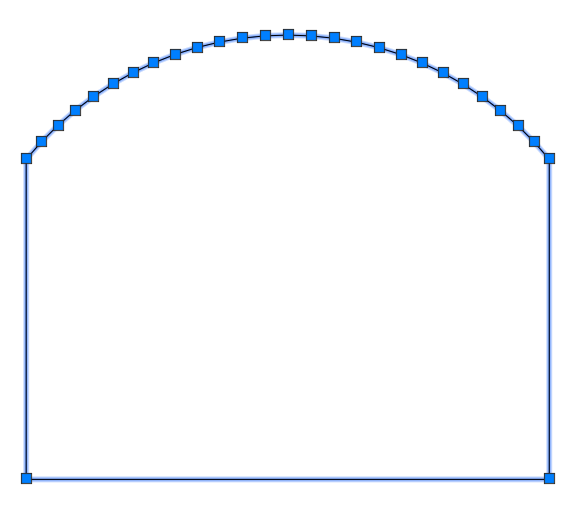
Here are a few images to show the difference between the three settings available in the GROUPDISPLAYMODE system variable. Each image shows a group consisting of an mtext object and a rectangular wipeout that has been selected within a drawing.

GROUPDISPLAYMODE set to 0
With GROUPDISPLAYMODE set to 0, the grips on all objects in the selected group will be displayed. Notice that I can adjust the limits of the wipeout or the width of the mtext object.

GROUPDISPLAYMODE set to 1
With GROUPDISPLAYMODE set to 1, a single grip at the center of the grouped object will be displayed. Notice the single grip at the center? With this setting I can't adjust the limits of the wipeout or the width of the mtext object.

GROUPDISPLAYMODE set to 2
With GROUPDISPLAYMODE set to 2, a group bounding box and a single grip at the center of the grouped object will be displayed. The only difference between this setting and the previous setting is that with the bounding box visible I can see the limits of the objects in the group.

Friday, January 18, 2013

Autodesk University 2012 Classes Posted

The materials and recordings for the 2012 Autodesk University classes have been posted. You can access the class list here:

You must have an AU account to access the classes. If you don't have an AU account, you can sign up for one here.

Since the announcement about this just went public, you may notice the website being a bit slow to respond. Just be patient because there are so many good classes available. In case you feel overwhelmed when you see the class listing, just refine your search such as Software: Civil 3D. There's even a filter for Language: Portuguese.

Enjoy!

OSNAPZ to the Rescue

Do you remember the Almond Joy/Mounds commercials?

(Sometimes you feel like a nut, sometimes you don't.)

The OSNAPZ command in AutoCAD reminds me of those commercials.

(Sometimes I want elevation, sometimes I don't.)

The OSNAPZ command is an easy way to switch between snapping to an elevation and forcing an elevation when creating or editing AutoCAD objects. When drafting in both the Civil Engineering and Land Surveying fields, both options are useful.

From the AutoCAD help documentation:

With OSNAPZ set to 0, OSNAP uses the Z-value of the specified point. For a polyline, the elevation selected for the first vertex will be assigned as the elevation of the polyline.

With OSNAPZ set to 1, OSNAP substitutes the Z-value of the specified point with the elevation (ELEV) set for the current UCS. With the system variable ELEV set to 0, the elevation will default to 0 for all selected points.

Now hopefully I can finally get that song out of my head.

Thursday, December 20, 2012

Which Way is North?

 Okay I admit it, the allure of one day being invited into the "Autodesk Expert Elite Program" has me checking the Autodesk Civil 3D Discussion Forums and blogging again. Since I'm only at the designated level of "Active Contributor", I have some work to do. Thanks, Autodesk!

The idea behind this post came from a question on the Autodesk Civil 3D Discussion Forums here. The issue is with a Civil 3D 2013 Dynamic North Arrow that is associated with a viewport with the UCS set to World, the dview twist angle set to "0", and the viewport set to plan. For some reason the north arrow was off by over 4.6 degrees. Bruce, a designated Autodesk "Expert Elite" himself, was kind enough to post a sample drawing to show the issue and here's what was discovered.:

Dynamic north arrows are associated with the 
selected coordinate system in the Units and Zone tab.

When you place a dynamic north arrow in a layout and associate it with a viewport, the block reads the current coordinate system that is assigned in the drawing settings Units and Zone tab and adjusts the default rotation of the block based on that setting. Even if there isn't a rotation in the viewport, the north arrow won't be pointing due north as you might expect. Here's an example.:

  1. In Civil 3D 2013, open an existing drawing or create a new drawing from scratch.
  2. On the model tab (modelspace) draw a rectangle of any size.
  3. In the Settings tab of Toolspace, right click on the drawing name and choose Edit Drawing Settings.
  4. On the Units and Zone tab, set the Drawing Settings Zone Categories to No Datum, No Projection.

    No Datum, No Projection

  5. In a layout (paperspace), create a rectangular viewport from scratch. Make sure you can see the rectangle in the viewport to verify rotation throughout this example. You may need to zoom out if necessary to see the rectangle rotation better.
  6. When you are in paperspace, there should be a Layout Tools ribbon tab available. Locate the Layout Elements Panel and select one of the built-in dynamic north arrows to place in the drawing.

    Select one of the built-in Dynamic North Arrows

  7. When prompted at the command line, select a viewport for the north arrow association.
  8. Next you'll be prompted to select a location to place the north arrow.
  9. The north arrow may be very small and hard to see. Set the x, y, and z scales to 20. Notice that it appears to be pointing due north when compare to the rectangle in the viewport.

    North is North
  10. To make sure we compare apples to apples, make a copy of the viewport in your drawing.
  11. Back in the Toolspace, Settings, Drawing Settings, Units and Zone tab, set the selected coordinate system to WA83-SF, then OK.
  12. Now place a new dynamic north arrow in the drawing using the second viewport (the copy) for the north arrow association. (Only one dynamic north arrow can be assigned to each viewport.)
  13. Place the second north arrow near the first one and again set the x, y, and z scales to 20.
  14. Notice that the north arrows don't point the same direction? That's because of the change made to the selected coordinate system.

    Compare the Dynamic North Arrows
This is definitely something that you need to take into consideration when you use the dynamic north arrows in a drawing with an assigned coordinate system other than No Datum, No Projection. If you do need to rotate the contents of a viewport, just set the coordinate system back to No Datum, No Projection before making the change, then reset the coordinate system as needed.

Another consideration is to set the coordinate system in the base drawing and attach it to a separate sheet drawing for plotting. The sheet doesn't need a coordinate system assigned to it so there won't be a discrepancy between plan north and the rotation of the dynamic north arrow.

UPDATE:  There is another solution that actually works better.

GEOGRAPHICLOCATION

In modelspace, type GEO at the command line then choose Remove the geographic location.


With the geographic location removed, you can keep the coordinate system assigned and the dynamic north arrow will point plan north as expected.

Tuesday, December 11, 2012

Slow Down and Render This

Yesterday, I received an email with an attached drawing. Verbally, the request was to determine why the drawing is so slow, especially when using the zoom extents.The email included the following additional information:

This file was messing up badly on Wednesday...crazy slow, etc.

This morning with my new reload of AutoCAD 2011, it wasn't as bad... but still has signs of corruption...


One thing that I noticed is that the TIN in the V-TINN-VIEW layer doesn't look right... the contours are fine... but I didn't know if you had a fix for that...


There are lots of things that can cause a drawing to be a little slow. I have a list of things I check in a drawing but I knew that many of those had already been checked by the owner of this drawing. The comment about the TIN not looking correct was definitely a clue to the problem as was the knowledge that the user had recently been working with point clouds including some third party software.

I knew the fresh install and absence of the third party software had ruled out that being the issue so my first option was simply to open the drawing. Here's what I saw in the bottom left corner of the application:

This is not the ucs icon that I typically see in my drawings. The thickness of the ucs icon elements was an indication to me that the visual style was set to something other than 2D Wireframe.

To verify my suspicion, on the View ribbon tab, I selected the dropdown on the Views Panel and found the visual style was set to Hidden.


 I left clicked on the Hidden visual style and changed the visual style to 2D Wireframe.


Now the ucs icon looks as expected and the speed of the drawing has returned to "normal".


Now if you are using AutoCAD 2012 or later, take a look at the upper left corner of model space. There you should find the Visual Style Controls.


As you can see, the visual style in this drawing is now set to 2D Wireframe. Changing this setting from Hidden to 2D Wireframe greatly improved the speed of the drawing.